*This post is sponsored by Star Roses and Plants. All experiences and opinions are my own.
How would I describe the Martha Stewart rose? That’s simple. To quote Martha herself…it’s a very good thing!
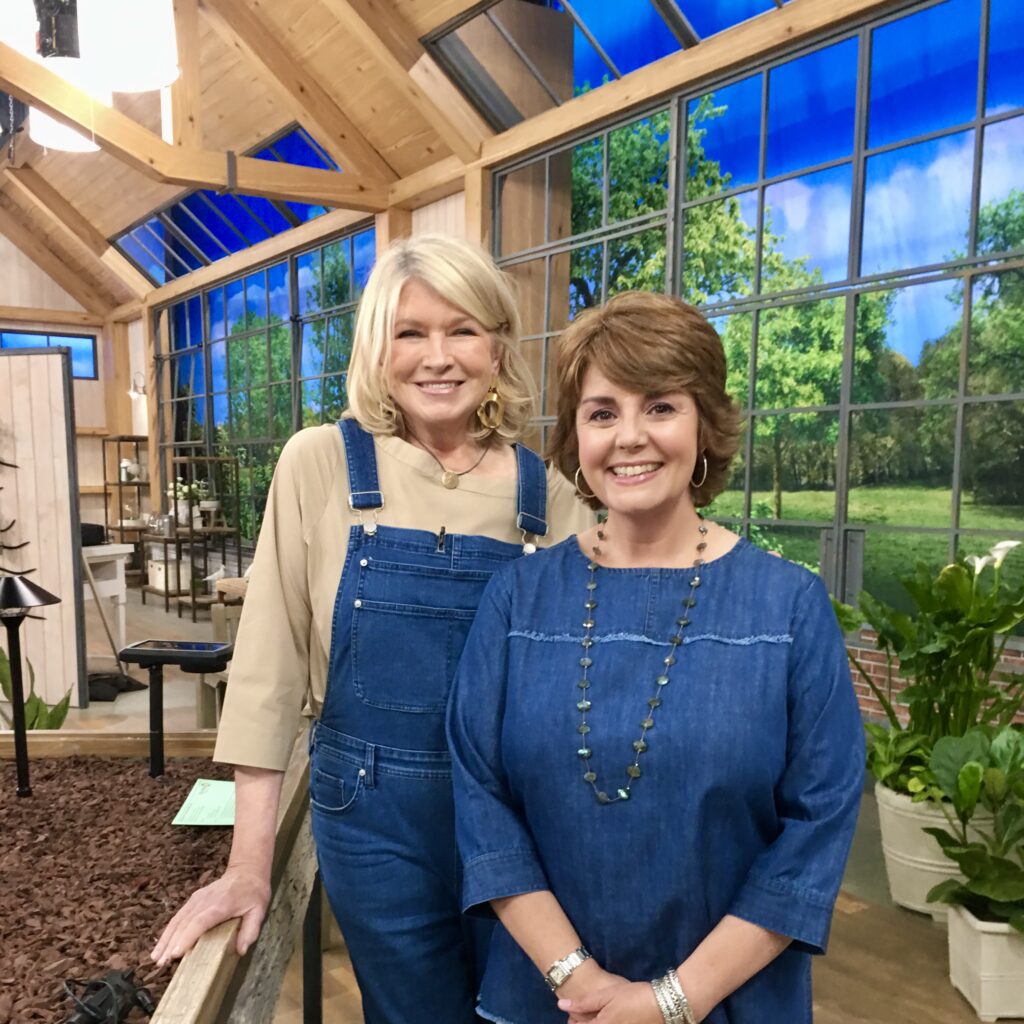
Longtime readers know I spent years as a program host on QVC, and over that time I had the privilege of working alongside Martha Stewart more times than I can count. If there’s one thing I learned from her, it’s that when Martha puts her name on something, it has been tested, tried, and truly earned it. So when Star Roses and Plants asked me to trial the new Martha Stewart Rose in my own garden before it hit the market, I said yes before they finished the sentence.
Last year was my first year growing this rose and I didn’t know what to expect. This year, I planted a good number more because once you’ve grown this rose, one simply isn’t enough. I’ve grown mine as potted own-root roses in large containers on my patio, so today I’m walking you through everything I’ve learned: what makes this rose so special, how to plant it (in the ground or in containers, whether you start with bare-root roses or a potted own-root rose), and exactly how to keep it thriving all growing season long.
Meet the Martha Stewart Rose
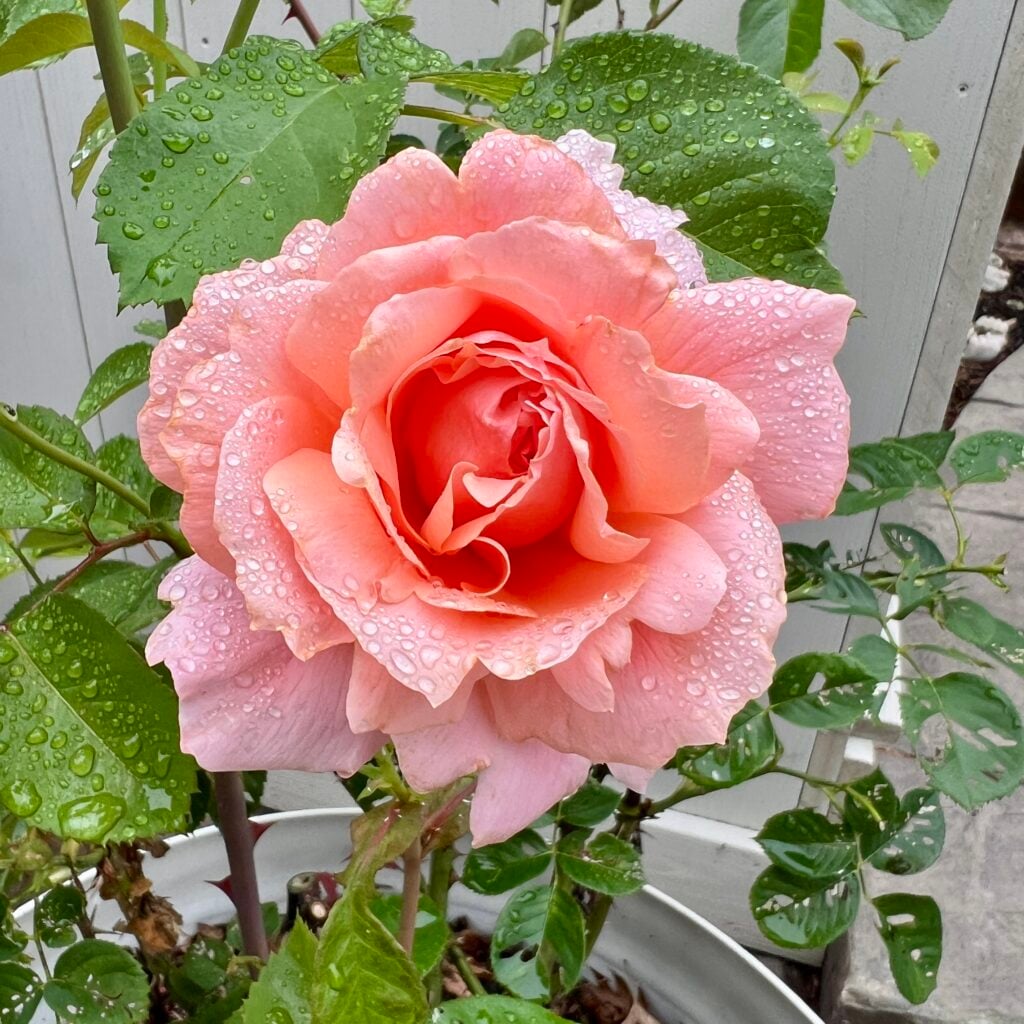
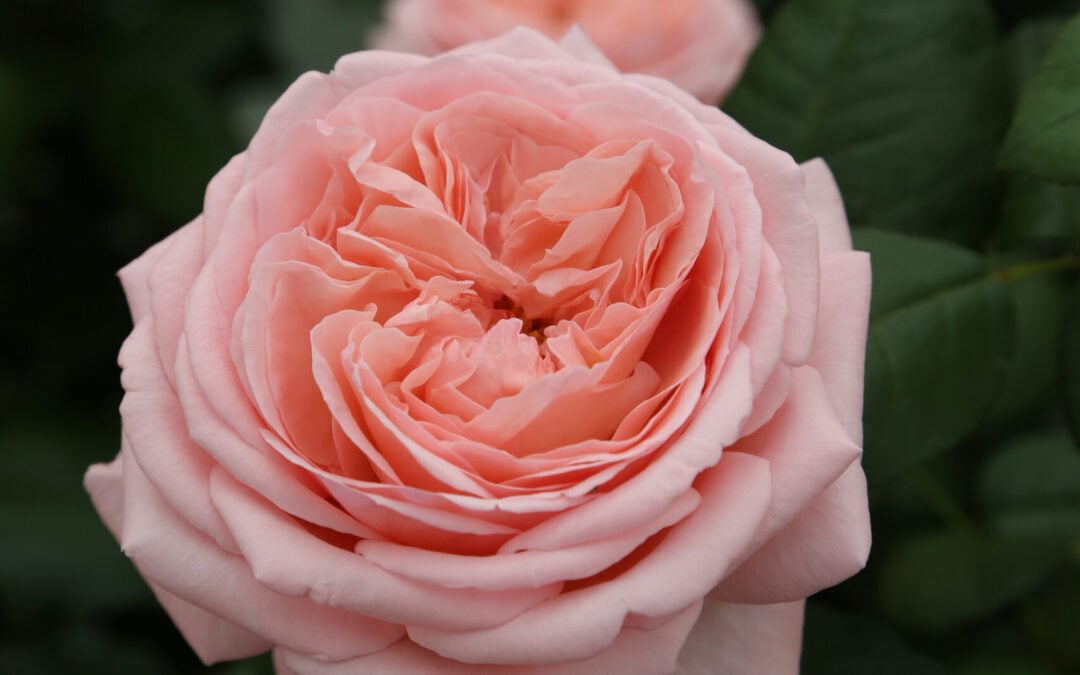
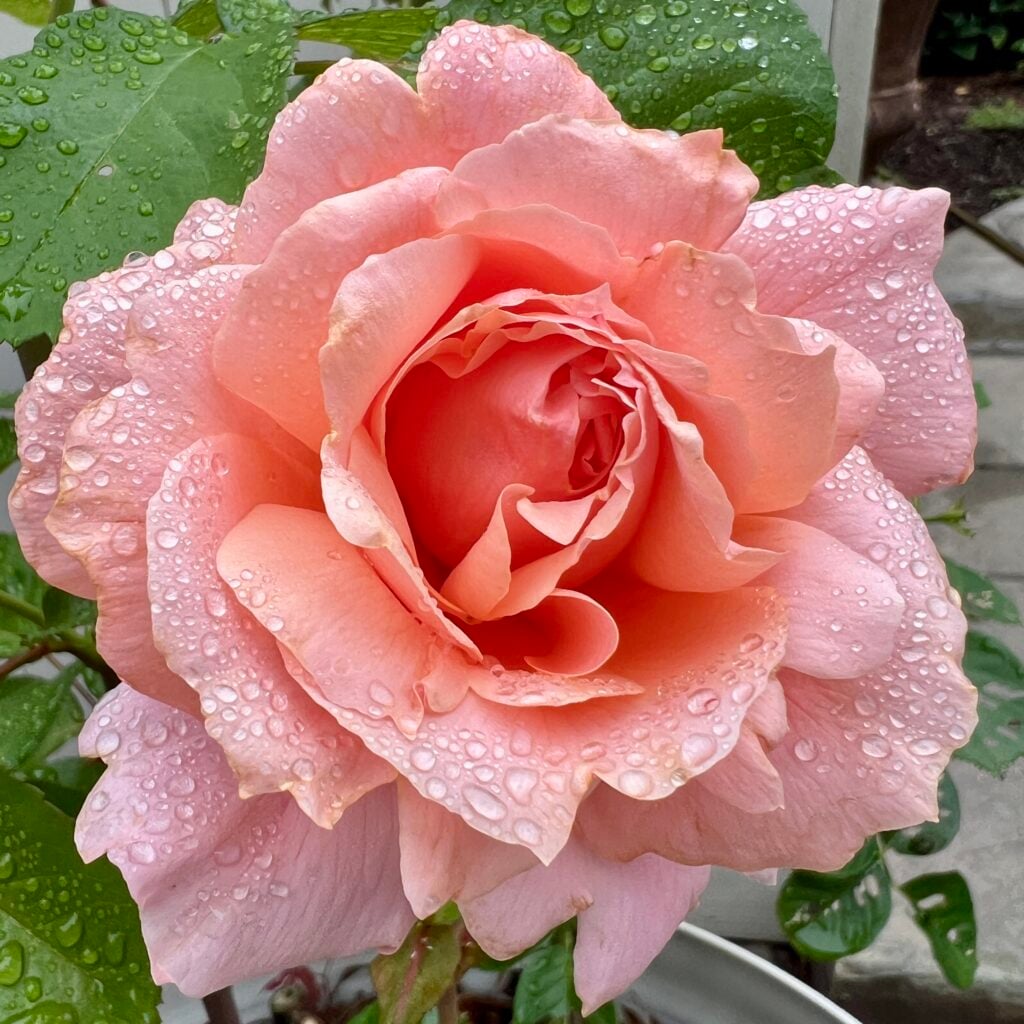
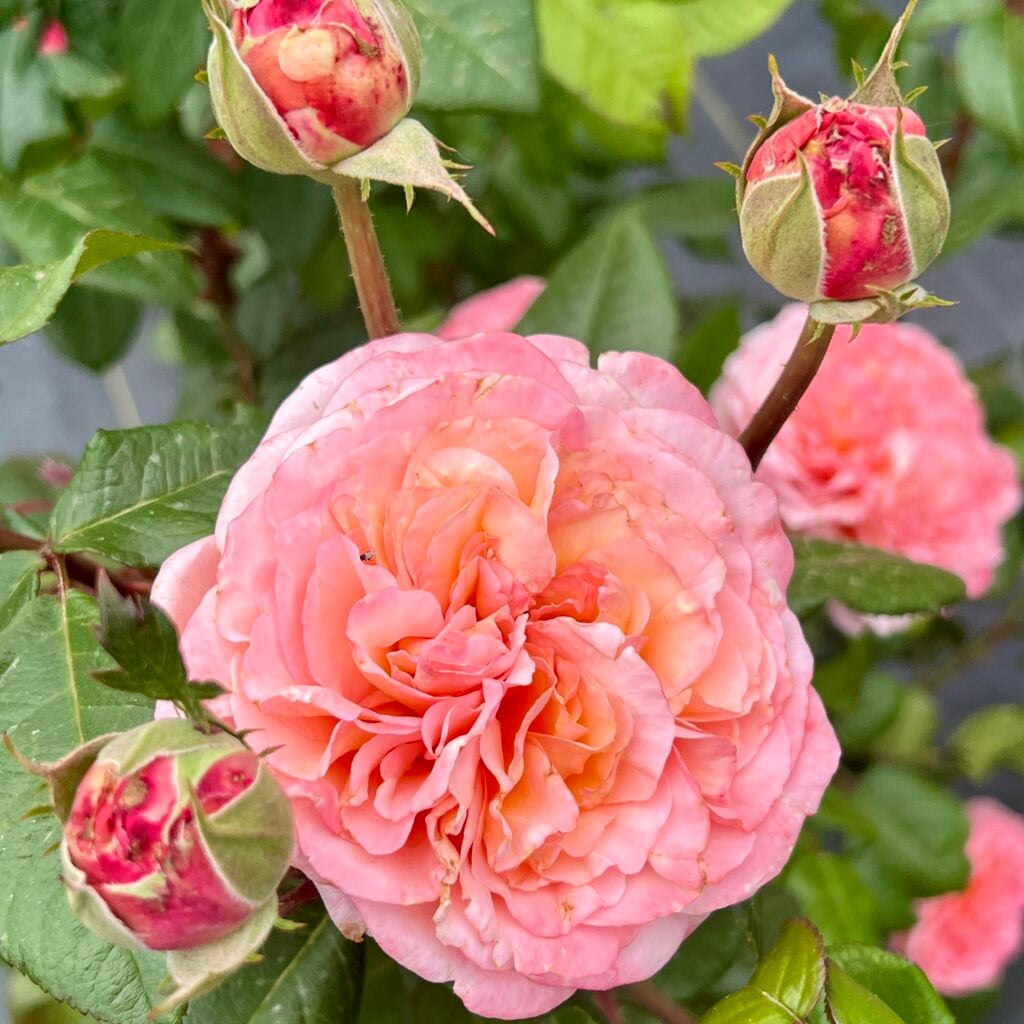
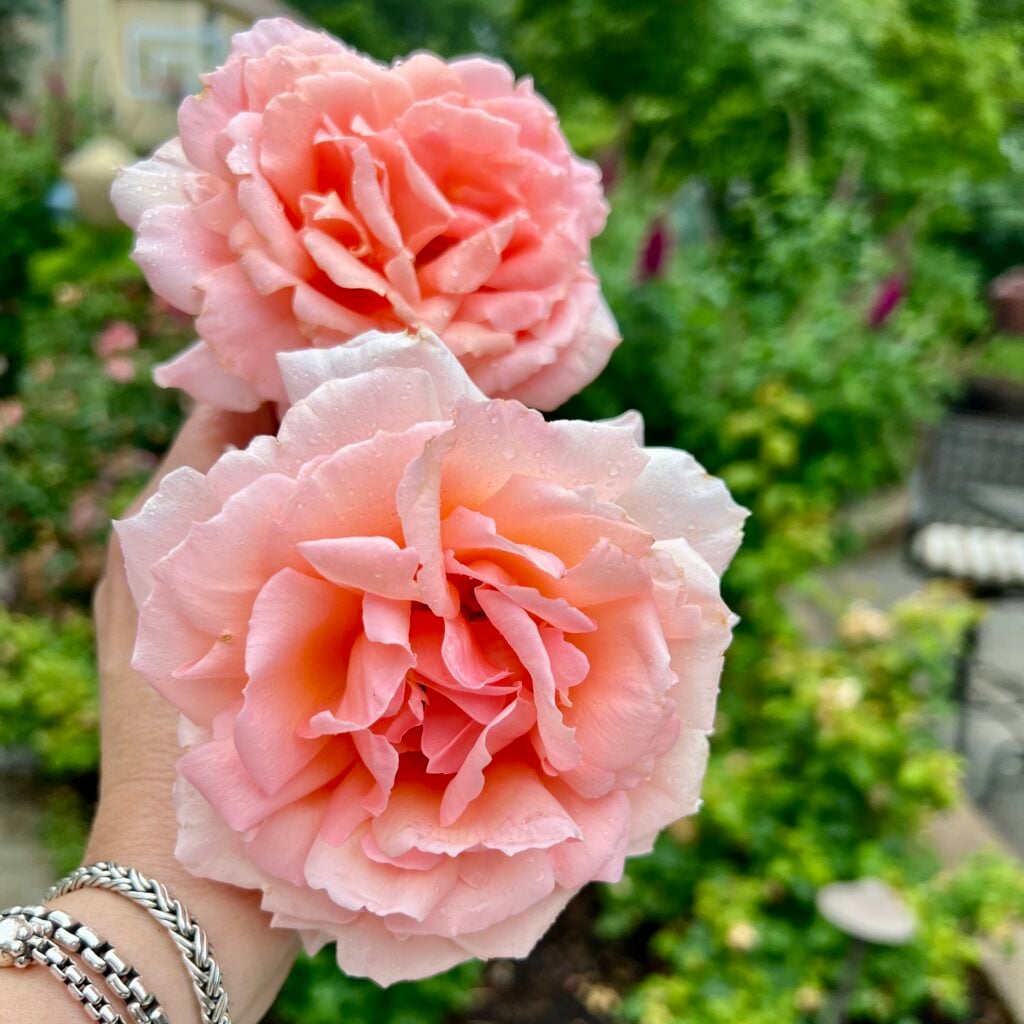
The Martha Stewart rose is a captivating hybrid tea rose bred for both beauty and performance. It produces large pink blooms in gorgeous, soft shades of ballet pink that shifts into gentle apricot undertones as the flower opens. It’s truly one of the most romantic color combinations I’ve seen in a rose!
This rose isn’t just another pretty face in your garden. It’s part of the Scentables® collection within the Bloomables® brand, which means fragrance was just as important to the breeders. Every bloom carries a sweet fragrance with notes of citrus and hints of lemon verbena, often described as a citrus-honeysuckle scent. Walk past this rose on a warm afternoon and you will absolutely stop to smell it. And you’ll likely linger! It’s that good.
Bloomables® roses have the look of traditional, romantic garden roses, but their modern breeding gives them excellent disease resistance and better longevity in the garden compared to old heirloom varieties. You get the nostalgic look with none of the heartbreak.
A Spectacular Addition to Any Garden
I’ve grown a lot of rose bushes over the years, and this one has quickly become a favorite in my rose collection. Here’s why:
- Long stems perfect for cutting and bringing indoors
- Glossy foliage with deep green foliage color that makes the blooms pop even more
- Vigorous growth habit with strong new growth each season
- A larger size at maturity, making it a radiant rose as a focal point, though it still adapts beautifully to small gardens
- Repeat blooms all growing season, not just one big spring show
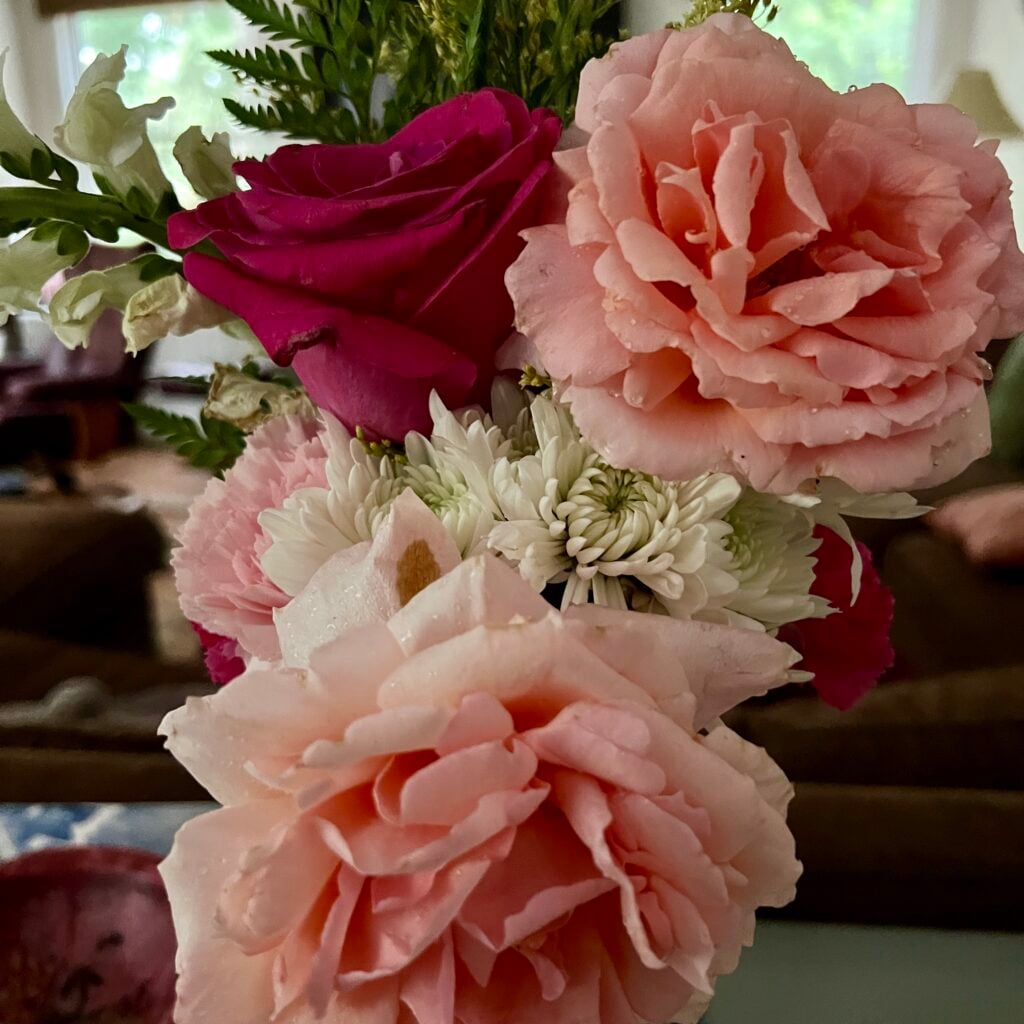
If you keep a flower-cutting garden like I do, this one earns a permanent spot. The stems are sturdy, the bloom form is full and romantic, and the fragrance carries indoors just as beautifully as it does in the garden. I love clipping a few blooms in the morning for the kitchen table for that instant “gathered from the garden” charm.
Where This Rose Comes From
The Martha Stewart rose was bred by Meilland® in France, a decades-long partner of Star® Roses and Plants. While this rose has been available in Europe under the name Jean de la Fontaine, Star® Roses and Plants had the honor of introducing the rose in the United States as Martha Stewart. I had the chance to tour their gardens this year, and watching thousands of these roses in various stages of root development and bud break was a gardener’s dream.

When and How to Plant Your Martha Stewart Rose
This rose is available at local garden centers starting this year, and you’ll typically find it sold two ways: as bare root roses in late winter to early spring, or as a potted own-root rose a bit later in the season.
Timing:
- Late winter through early spring is ideal for planting bare-root roses, while the plant is still dormant.
- Late spring works well for potted, actively growing plants once your soil has warmed.
Sunlight:
This rose wants full sun so aim for at least six to eight hours of sunlight a day. Roses grown with fewer hours of sunlight will still survive, but you won’t get nearly the peak bloom performance this variety is capable of.
Soil:
Good drainage is non-negotiable with roses. Plant in well-drained soil and always check that your container or bed has proper drainage holes. Roses hate wet feet, and soggy soil is one of the fastest ways to lose a rose bush to root rot.
Planting Step-by-Step
- Dig a hole roughly twice the width of the root system.
- Loosen the soil at the bottom and mound it slightly in the center of the hole as this gives the roots something to drape over naturally and encourages healthy root growth.
- Position the plant so the soil line (the point where the plant met the soil in its nursery pot, or the graft union on bare-root plants) sits at or just slightly above ground level.
- Backfill gently, water deeply, and firm the soil around the base.
- Mulch to help retain consistent moisture while the plant settles into its first year in your garden.
Growing in Containers (My Personal Favorite Method!)
Since most of mine are potted own-root roses, I plant them straight into large containers on my patio, and I’ve been thrilled with the results. A few tips if you want to do the same:
- Size matters: Go big. I use containers at least 18–24 inches wide and deep. Roses have substantial root systems, and a larger size container gives them room to develop properly and supports the vigorous growth this variety is known for.
- Drainage is everything: Make sure your container has generous drainage holes at the bottom. Roses will not tolerate wet feet, and containers can hold moisture longer than garden beds, so this step is even more critical than in-ground planting.
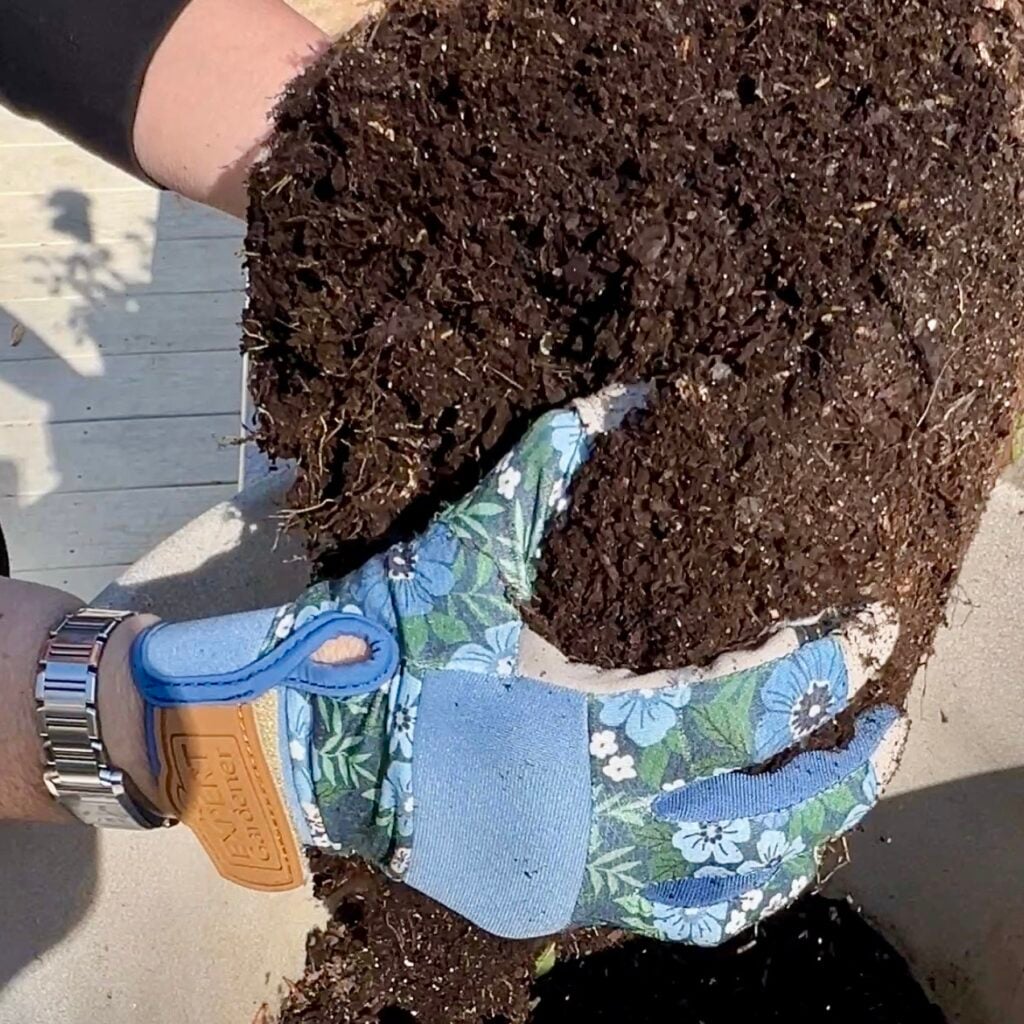
- Use quality potting mix: A well-draining soil blended for containers (not garden soil, which compacts) keeps roots healthy and supports strong root growth from the start.
- Watch the soil line: Just like in-ground planting, keep the soil line at the same level it was in the nursery pot. Don’t bury the crown.
- Water more often: Containers dry out faster than garden beds, especially through the heat of summer. Check daily during peak bloom and adjust to maintain consistent moisture.
- Feed a little more generously: Nutrients wash out of containers faster than garden soil, so I feed my potted roses with rose fertilizer slightly more often than I would an in-ground bush.
- Full sun still applies: Wherever you place your container, make sure it gets full sun and those crucial six to eight hours of sunlight. Containers can be moved to chase the light if needed, which is one of my favorite things about growing roses this way.
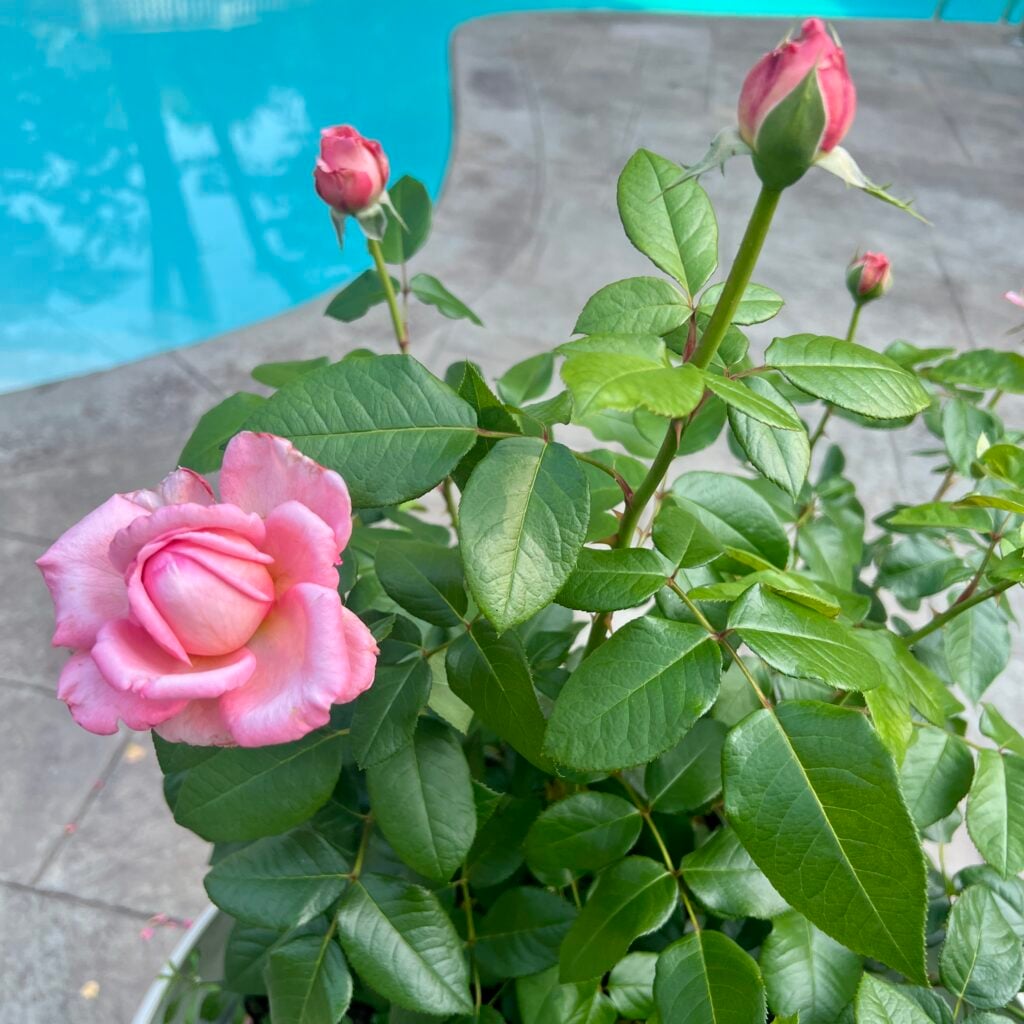
Container growing is such a wonderful option if you’re working with small gardens, a patio, or even just a sunny corner of a deck. You get all the beauty and fragrance of this rose variety without needing a dedicated garden bed.
Caring for Your Rose All Season Long
Once your rose is in the ground, the growing season care is refreshingly simple:
- Water: Aim for consistent moisture, especially during the first year while root development is underway. Deep, infrequent watering encourages roots to grow down rather than staying shallow.
- Feed: A quality rose fertilizer applied in early spring and again after the first flush of blooms will support strong repeat blooms through summer and fall.
- Check your hardiness zone: Like most hybrid teas, this rose performs best within its recommended hardiness zone, so check your zone before planting and plan winter protection accordingly if you’re on the colder edge of its range.
- Watch the foliage: Healthy plants show dark green foliage with a strong central rib on each leaflet and minimal spotting. It’s a good visual check for disease resistance in action.
Why I Keep Coming Back to This Rose
I get asked all the time which rose variety I’d recommend for a home gardener who wants something a little more special for the garden. This is it. Between the pink-apricot blooms, that unmistakable sweet fragrance, and how easy it’s been to care for compared to some of the fussier heirlooms in my garden, the Martha Stewart rose has become the one I recommend most.
It really is a truly spectacular addition, whether you’re planting a single bush by your front door, filling out a rose collection along a fence line or patio full of containers, or growing a few just for your floral arrangements. And knowing the story behind it ( bred by a six-generation family-owned rose-growing business and is Martha approved) makes it feel like more than just another pretty flower.
Quick Facts: Martha Stewart Rose
| Type | Martha Stewart hybrid tea rose |
| Color | Shades of ballet pink with apricot undertones |
| Fragrance | Sweet, citrus-honeysuckle scent with notes of citrus and lemon verbena |
| Sun | Full sun, 6–8 hours of sunlight |
| Soil | Well-drained soil, avoid wet feet |
| Bloom habit | Repeat blooms through the growing season, large pink blooms with full petal count |
| Best for | Flower-cutting gardens, small gardens, focal-point planting |
| Available | This year, at local garden centers, bare-root or own-root |
By the Way, If You Love Fragrant Roses…
One more little note before you go: the Martha Stewart rose isn’t the only fragrant beauty in my garden this year. If you fall for her the way I did, I’ll also mention I’m growing two of her Scentables® siblings! Bolero™ and Loves Me Loves Me Not™ are great companions from the same rose collection.
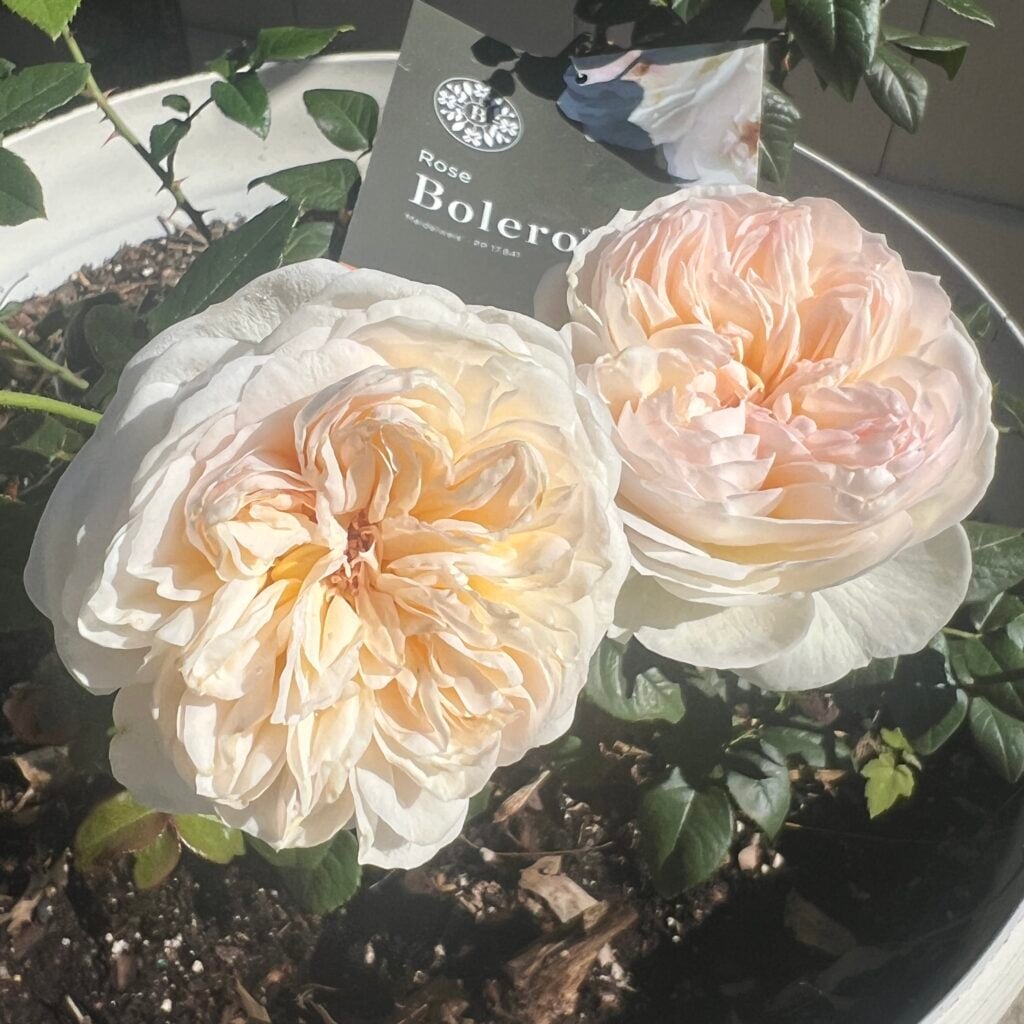
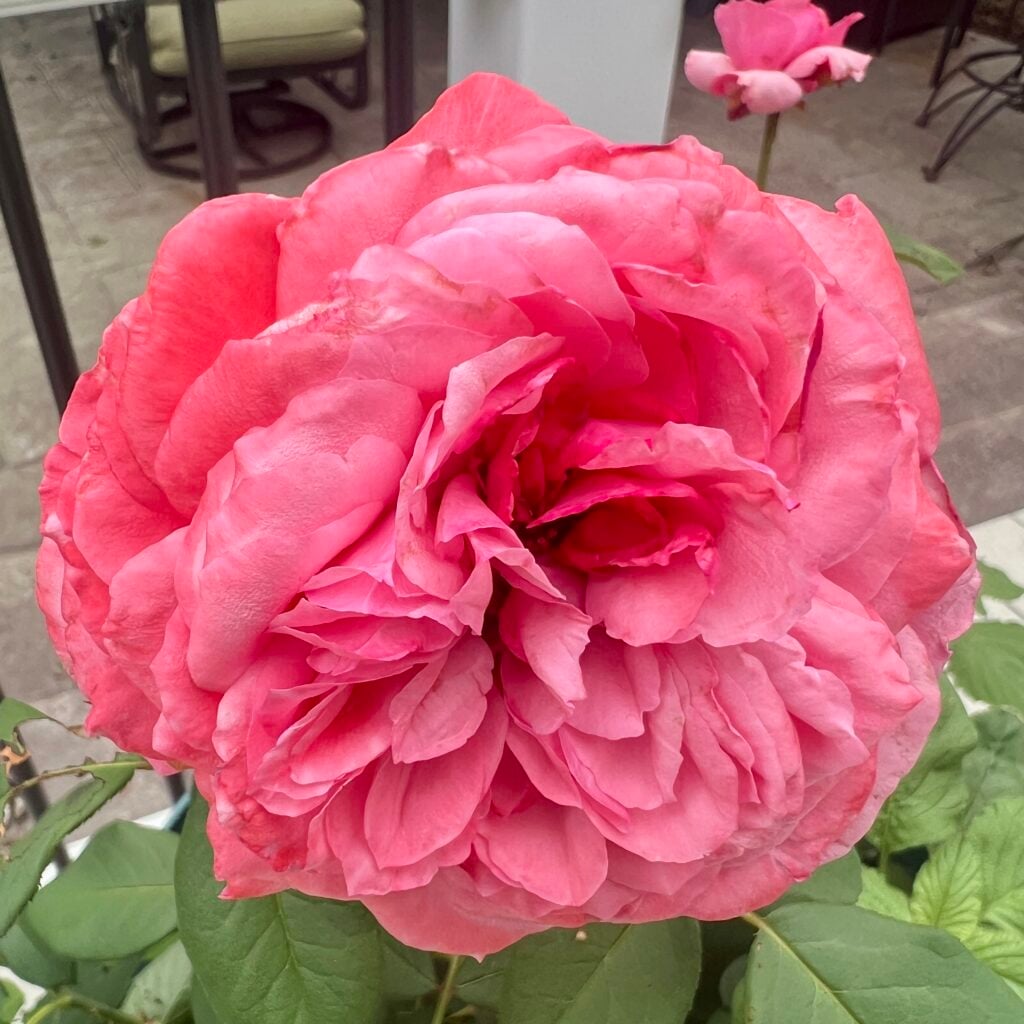
Bolero™ has that same lush bloom form but in pure white ruffled petals, and Loves Me Loves Me Not™ is a charmer with brighter two-toned pink-and-cream blooms. Both share that same excellent disease resistance and vigorous growth from the Bloomables® breeding program. If you’re already planning a flower-cutting garden, they make lovely companions to plant alongside the Martha Stewart rose.
Where to Find Your Own Martha Stewart Rose
The Martha Stewart rose, part of the Scentables® collection from Bloomables®, is available at select local garden centers across North America. Ask for it by name, or look for the Bloomables® tag on bare-root and potted roses. And while you’re there, keep an eye out for its Scentables® siblings, Bolero™ and Loves Me Loves Me Not™, too.
If you’re growing any of these roses in your garden this year, I’d love to see it! Tag your photos so I can watch your rose bushes bloom right alongside mine. If you’d like to see more from my garden, read about what else I’m growing here:
Knock Out® Roses: A Step Into My Garden
Getting My Garden Ready For Another Gorgeous Season
From my garden to yours,
Jill